

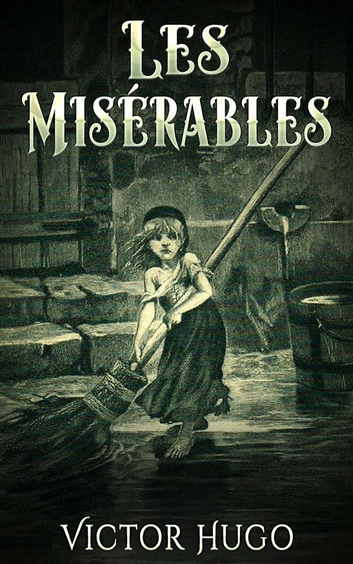
Hello everyone! Back to my reading of Les Misérables. A week ago, I finished all the chapters on the Battle of Waterloo.
All sections about this clash were informative and engaging. Giving a glance at how this famous battle could have been. I say could have because Victor Hugo, as a Frenchman whose father served as a General under Napoleon Bonaparte and was a royalist in his early years, gives his description of this battle a romanticized touch. That’s reasonable, for he wishes to stand up to the heroic sacrifices of the French. Giving them the role of victims of destiny.
It is important to note that not everything presented in these chapters about the Battle of Waterloo is historically accurate. Of course, there are authentic elements, like weather, the heavy rain, and the delay of the battle, the key protagonists who take part, and the general atmosphere.
However, Hugo, as an excellent writer, added elements to elevate the French side to that level by creating a mythic atmosphere. Elements like the sunken road of Ohain, which builds up an extraordinary, dramatic feeling of compassion for the French, or presents us with General Cambronne as a humorous hero when he responds after being asked to surrender with “Merde!”
Fiction often draws on historical moments, but readers should always read it with care; if someone wants to know the real historical facts, they should turn to the relevant field of literature.
As Victor Hugo was a royalist, I also note, for completeness, that he later, around 1850, became a faithful republican.
So, this is all I have to say about Les Misérables concerning the Waterloo chapters. And here are some excerpts I found interesting.
“The man who had been grim at Austerlitz was cheerful at Waterloo. Those with the greatest destinies to fulfil often make these mistakes. Our joys are illusory. The supreme smile belongs to God.”
“[…] believing as he did that he was master and owner of the outcome, he could wait, assuming that he was beyond question, and he treated destiny as his equal. He seemed to say to fat: You would not dare.”
“This madness, this terror, this collapse into ruin of the greatest bravery that has ever amazed history – was this without cause? No. The shadow of an enormous right hand falls on Waterloo. It was the day of destiny. […] On that day the prospects of the human race changed. Waterloo is the pivot of the nineteenth century. […] The heroes’ panic is understandable. The battle of Waterloo was not just a matter of cloud – it was a matter of meteorology. God intervened.”
“What is Waterloo? A victory? No. A lottery. A lottery won by Europe at France’s expense. It was not really worth putting a lion there.”
image: Kobo.com
 Welcome to Vasos Storyland
Leave a comment