

In the gradual decay of Expressionism, new ways of poetry expression unfolded. Specifically, during World War I, the movement of Dadaism grew, launching a revolutionary assault on Expressionism. It became more active after the end of the war, between a seething revolutionary atmosphere in Berlin. However, Dadaism was not the only child born from this historical frame; there were also the New Objectivity movement and Merz Poetry.
This article analyzes the transition from Expressionism to Merz Poetry in depth.
Looking at the poetry of Expressionism, one can see the effort to maintain and break the traditional forms. The latter is precisely accomplished by bursting the poem’s shape, particularly by using free rhythm and stanzas, the destruction of syntax, and the diversified way of speech. The Expressionists are not just trying to build direct contact with the audience, but they insult and provoke it, calling for reflection upon its shadows and identity. To realize this contact, they choose the stage, like Cabarets and Varietés, where they recite their texts. At this point, an alternate solidary human feeling emerges, one that isn’t oriented on the civil social stratum but on the marginal groups.
Expressionist artists, inspired by Baudelaire and Rimbaud, introduce the hideous into literature, reshaping the human being and emphasizing the synchronicity of poetry. This ‘O-Human-Poetry’ of expressionism creates new metaphors and symbols, finding a connection with Sturm-Circle’s Word Art.
The Sturm-Circle defines ‘word art’ as the repetition of the meaning and emotion of the experienced, expressed through the word, and its rhythmic alignment to an overall expression. This innovative approach blends various art forms, allowing poetry, music, play, dance, and fine art to collaborate synesthetically. The interaction between text and picture is a key aspect of Sturm-Circle’s methodology, stimulating visual perception in a unique and simultaneous way.
The word in poetry becomes important by delivering terms through alignment with other words, with which later the writer can work.
At this point, attaches language criticism due to its confidence that words can no longer represent their conceptual meaning; therefore, awareness of the world can’t be expressed through speech.
This language crisis doesn’t influence only the world’s cognition but also how humans socially interact. This contact is marked by insufficient interaction and communication.
By criticizing open knowledge and language, the Expressionists try to express their doubts about natural sciences, their causative and mechanical thinking, and their claim to represent truth and the rational, independent subject exclusively.
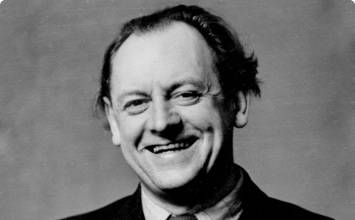
Regarding “Wordart,” which initiated the Sturm-Circle, develops later Kurt Schwitters his “Merz-” poetry. The term “MERZ” evolves from the word “commerce. “
According to Schwitters’s conception, the mission of art is to liberate human beings from the pressures of life, whether confrontations in the national, political, or commercial arena. Furthermore, in the sense of the avant-garde, art has to change the practice of life and thereby try to remain autonomous. Schwitters writes all these notions down in his manifest, which he puts in a social context. Schwitters experiments with the visual and poetic for his artistic productions, which go beyond parody. He deals with events of his time, like the following: 1. World War, the Weimar Republic, and the social restructuring. In these significant changes, which also include a revolutionary spirit, Schwitters recognizes an initiation of a renewal of artistic production. He even uses garbage for his art production, which he names “Merz.”
Merzart wants to break free from every constraint, but it doesn’t work without rules because the artistic result also depends on organization and logical combination. Therefore, composition plays a vital role, i.e., the singular parts must be formed into a whole so the artist’s intended feeling can be transferred. Schwitters wishes with his art to aestheticize life and to vitalize art. These two parts, life and art, are his material and originate from the world.
Later, Kurt Schwitters transmits the attributes of Merzkunst to his poetry and identifies himself with it. In addition, he demands a stage open to experiments so that the complete Merz work of art can come to the fore. On this stage, everything possible is accepted as an artistic medium, even a human being, as it is in his normal everyday life, whereby normal is considered as an exceptional case.
However, the press stamps Schwitters’s art as madness, but Schwitters forestalls and declares that his art encourages the healing of this madness.
Schwitters opposes sense and nonsense and prefers nonsense. Thus, the individual parts of a complete work become sense after they are in their position and relation to one another. Equally receives the linguistic sign with its linkage with other parts of art its meaning, and the more alienated it emerges, the greater its artistic effect. As for language usage, Schwitters turns from its semantic function to its structural and rational function. Abstract poetry evaluates values against values or Words against words. Syllables, words, and sentences are elements of poetry, and their composition proceeds not in the sense of the spoken language, as it has another intention. These elements are removed from their common utilization and arranged into a different relation to each other. Regarding Sturm-Circle with their Wordart, Schwitters notices that the actual element of poetry is the single letter, and with its fixed alignment, clarity can only be established. Wordart can’t be interpreted because the sense and idea behind it can be followed only by the existing relation among the letters. However, all this depends on the recipient’s observation. Be it the single parts or materials that have already been used. In that case, it doesn’t play any role, even in the case of poetry, because poetry utilizes pre-formulated and applied phrases from daily newspapers, posters, and everyday speech.
In his creative production, Schwitters uses expressionistic metaphors, neologisms, advertising methods, and figures of speech. Thus, he points to the “Collage” as a type of art since the borders of the genre are erased throughout the artwork. The procedure is that the pictures get transcribed, the scripture is displayed and confirmed by a rhythm, and the music is displayed and made appropriate to read.
Schwitters delivers an example with the poem “An Anna Blume,” which firstly reminds one of a traditional love poem but is released from its purpose and parodied to express a critical point of view. Therefore, he uses the material of love poems and love songs for this poem. These material elements undergo an estrangement and are combined with other parts, such as grammatical alterations and typification of erotic characteristics.
However, Schwitters emphasizes that only those with specific experiences can understand this critical humoristic expression. Otherwise, this art remains uncomprehending because he views language from a historical angle and subordinates it to the norm, ratio, and relativism. This results in us discussing a system where signified and significant must be interpreted due to their different relation. Schwitters speaks of an uninterpretable work of art due to this binary relationship.
The poem “An Anna Blume” functions as a bridge to concrete poetry, as concrete poetry engages with the reception of this poem.
To Anna Blume

You, oh you, beloved of my twenty-seven senses, I

love ya! - You thine thou yours, I you, you me. - Us?

This (incidentally) does not belong here.

Who are you, countless woman? You are

- are you? - People say you are - let

them say it, they don't know where the steeple is.


You wear a hat on your feet

and stand on your hands,

on your hands you walk.


Hello, your red clothes, sawed into white pleats.

Red I love, Anna Blume, red I love ya! –

You thine thou yours, I you, you me. - Us?

That (incidentally) belongs in the cold embers.

Red flower, red Anna Blume, what are people saying?
Source Poem Translation: BABELMATRIX, Babel Web Anthology
Bibliography:
Fähnders, Walter: Avantgarde und Moderne 1890-1933.
Anz, Thomas (2002): Literatur des Expressionismus. Stuttgart: J.B. Metzler.
Zeller, Christoph (2008): „Aus Müll Gold gesponnen: Kurt Schwitters’ Merzkunst und die Inflation“. In: German Studies Review 31, H.2, S. 345.
Hereth, Hans-Jürgen (1996): „Die Rezeptions- und Wirkungsgeschichte von Kurt Schwitters, dargestellt anhand seines Gedichts „An Anna Blume“ “. In: Kreuzer, Helmut / Riha, Karl (Hg.).
Forschungen zur Literatur- und Kulturgeschichte. Frankfurt a. Main: Peter Lang (= Bd. 53).
 Welcome to Vasos Storyland
Leave a comment